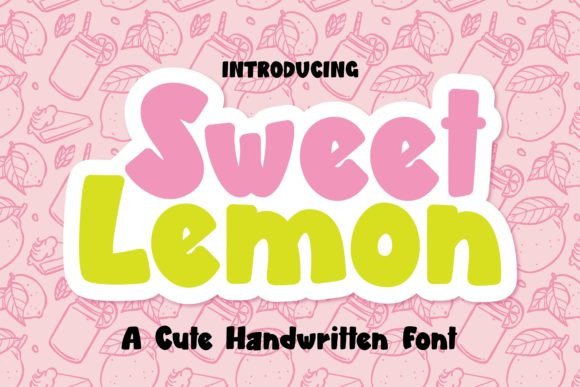
Sweet Lemon: A Versatile and Stylish Display Font for Creative Projects
Sweet Lemon is a display font that combines charm with flexibility, making it a popular choice among designers looking for a unique visual identity. Its soft curves and playful structure give it a distinct personality that stands out in a variety of design contexts. Whether used for personal or professional projects, Sweet Lemon offers a balance between readability and artistic expression.
What Makes Sweet Lemon Unique?
Sweet Lemon distinguishes itself through its elegant yet approachable design. The font features rounded edges and subtle flourishes that add a sense of warmth and creativity. Unlike more rigid or formal fonts, Sweet Lemon feels inviting and expressive, allowing it to fit into both modern and traditional aesthetics.
Its versatility is one of its greatest strengths. The font works well in both digital and print formats, adapting seamlessly to different sizes and applications. This makes it particularly useful for designers who need a consistent look across multiple platforms.
Comparing Sweet Lemon to Similar Fonts
When evaluating display fonts, designers often consider options like Lobster, Pacifico, or Great Vibes. Each of these fonts has its own character and use cases. For example, Lobster is bold and eye-catching, while Great Vibes has a more ornate, script-like feel. Sweet Lemon sits somewhere in between, offering a middle ground that is neither too flashy nor too plain.
Compared to other casual display fonts, Sweet Lemon provides a more refined appearance without sacrificing its playful nature. This makes it a good alternative for projects that require a balance between creativity and professionalism.
Best Use Cases for Sweet Lemon
Sweet Lemon excels in applications where a friendly and distinctive visual presence is needed. Wedding invitations are a prime example—its soft style can convey romance and celebration without being overly elaborate. Similarly, thank you cards and greeting cards benefit from the font’s warm and personal tone.
In branding, Sweet Lemon can be effective for businesses that want to communicate a sense of approachability. It works well for logos, business cards, and promotional materials in industries such as hospitality, education, and creative services. However, it may not be the best choice for high-end or corporate environments where a more formal font might be preferred.
Strengths and Limitations of Sweet Lemon
The primary strength of Sweet Lemon is its adaptability. It can be used in a wide range of designs without appearing out of place. Its legibility at smaller sizes also makes it suitable for body text in certain contexts, though it is primarily designed as a display font.
One limitation is that its casual style may not align with all design goals. In situations where a more serious or structured look is required, Sweet Lemon could feel inappropriate. Additionally, while it is visually appealing, it may not offer the same level of customization as some other fonts, especially those with extensive glyph sets or language support.
When to Choose Sweet Lemon
Sweet Lemon is an excellent choice when the goal is to create a design that feels personal and engaging. It works well for projects that aim to evoke emotion or establish a connection with the audience. For instance, in social media graphics, blog headers, or event promotions, the font can add a touch of personality that other fonts might lack.
It is also ideal for designers who want to experiment with typography without compromising on clarity. The font’s clean structure ensures that it remains readable even when used in larger sizes, making it a reliable option for headlines and titles.
Alternatives to Consider
For designers seeking similar styles, there are several alternatives worth exploring. Fonts like Amatic SC or Fredoka One offer a comparable balance of playfulness and readability. These options may be more suitable for specific use cases, such as mobile app interfaces or web headers, where a more modern aesthetic is desired.
If a more sophisticated look is needed, fonts like Cinzel or Playfair Display provide a refined alternative. They maintain a strong visual presence while offering a more classic or elegant feel. The choice ultimately depends on the project’s tone and the designer’s creative vision.
Conclusion: Is Sweet Lemon Right for Your Project?
Sweet Lemon is a valuable addition to any designer’s toolkit, particularly for projects that benefit from a friendly and expressive typographic style. Its combination of elegance and flexibility makes it a practical choice for a wide range of applications. However, it is important to consider the context and goals of each design before deciding to use it.
By understanding the strengths and limitations of Sweet Lemon, designers can make informed decisions about when it is the right fit and when another font might be more appropriate. Ultimately, the best font is the one that enhances the message and resonates with the intended audience.